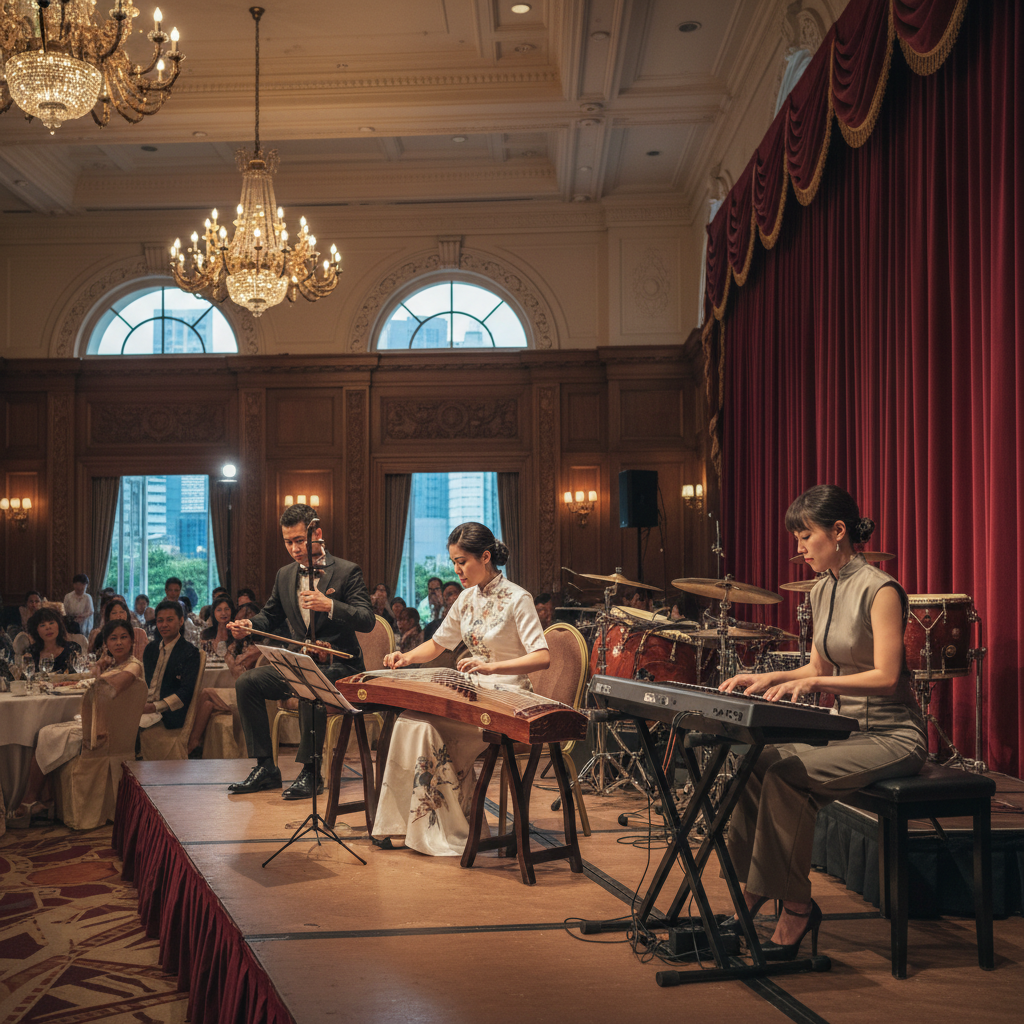
Multinational companies hosting annual dinners, regional summits, and awards galas in Singapore frequently look for entertainment that reflects Asian heritage while appealing to a global guest list. Standard classical quartets can feel predictable, while loud pop bands often disrupt formal conversation. A modern Chinese fusion ensemble bridges this gap by blending traditional instruments with contemporary rhythms.
Featuring combinations like the guzheng, erhu, and pipa alongside Western keyboard, cello, or cajon, these ensembles create an elegant visual and auditory centerpiece. They fit naturally into prestigious venues such as Capella Singapore, Raffles Hotel, and The Ritz-Carlton Millenia. Understanding how to select instruments, balance audio, and plan repertoire ensures your booking delivers maximum impact.
Popular Instrument Lineups for Chinese Fusion Acts
A Chinese fusion band builds its identity around contrasting acoustic timbres. The most popular corporate format is a three-piece or four-piece group. A core trio typically pairs a guzheng or pipa for bright melodic plucking, an erhu for expressive bowed tones, and a Western pianist or acoustic guitarist to anchor modern chord structures.
Expanding the group to a five-piece band brings in a percussionist playing cajon or electronic hand drums, alongside a Western upright bass or cello. This expanded rhythm section provides enough dynamic power to transition from delicate cocktail background music into punchy stage showpieces during the main gala dinner.
Curating Repertoire for Regional and International Guests
The key strength of modern Chinese entertainment lies in its versatility. Skilled fusion musicians do not limit themselves to ancient folk ballads. They rearrange current English pop hits, Broadway showtunes, and classic jazz standards alongside celebrated Mandarin melodies like The Moon Represents My Heart.
Hearing Adele, Coldplay, or Teresa Teng performed on an erhu backed by contemporary jazz piano chords creates an instant talking point for international delegates. Work with your music director to establish a 70-30 split, pairing recognizable Western chart covers with iconic Asian classics to keep the room fully engaged across both performance sets.
Venue Acoustics and Audio Rider Requirements
Traditional Chinese instruments feature delicate harmonic overtones that require careful microphone placement. The erhu produces sound from a small python skin resonator, while the guzheng uses twenty-one individual strings that demand sensitive clip-on condenser microphones. In high-ceiling ballrooms, untreated acoustic instruments risk feedback if sound engineers lack experience with ethnic instrumentation.
Always confirm that your AV provider supplies dedicated direct input boxes and high-grade instrument mics rather than standard handheld vocal microphones. Unlike loud rock groups, a Chinese fusion live band thrives on balanced stage monitoring so musicians can hear intricate finger-picking patterns over dining room chatter.
Investment Costs and Booking Windows in Singapore
Professional Chinese fusion bands in Singapore charge professional rates based on ensemble size and season. A three-piece instrumental trio generally costs between SGD 2,200 and SGD 3,500 for two 45-minute sets. A five-piece ensemble featuring percussion, bass, and specialized arrangements ranges from SGD 4,200 to SGD 6,800.
Demand peaks dramatically during the fourth quarter gala season and the weeks leading up to Chinese New Year. Premium corporate ensembles book out four to six months ahead for dates in January, February, and November. Secure your musicians early to ensure your preferred instrumentation is available for your event date.