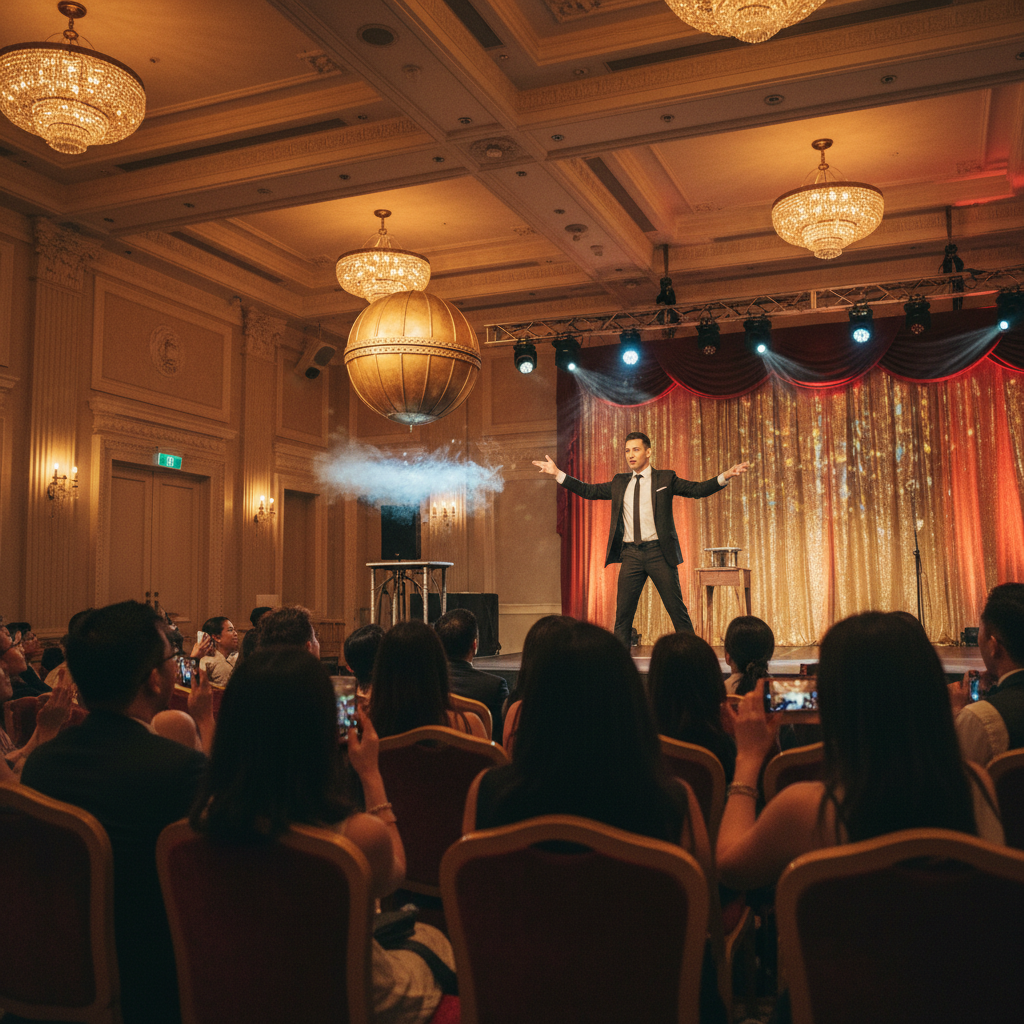
Magicians add a touch of wonder to any event, from corporate galas to wedding receptions in Singapore. However, knowing whether a roving magician or a stage magician best suits your occasion is key to maximizing their impact. Each style offers a distinct experience for your guests.
This article outlines the characteristics, benefits, and ideal settings for both roving and stage magic. We help you choose the best fit for your event, ensuring an engaging and memorable performance.
Roving Magicians: Personal Engagement and Intimacy
A roving magician moves freely among your guests, performing close-up magic like card tricks, coin manipulations, and sleight of hand. This style creates intimate, personalized experiences, often leaving guests astonished just inches from the action.
Roving magic is ideal for cocktail receptions, networking events, and pre-dinner entertainment at venues like hotel ballrooms or rooftop bars. It breaks the ice and gets people talking, enhancing the overall atmosphere of mingling. Magicians can perform for 1 to 2 hours, interacting with small groups at a time.
Stage Magicians: Grandeur and Collective Spectacle
Stage magicians perform larger-scale illusions from a designated stage area, captivating a larger audience simultaneously. Their acts often involve elaborate props, visual effects, and audience participation, making them a focal point of your event.
Stage magic is perfect for gala dinners, corporate award nights, or product launches held in grand ballrooms or convention centers such as Marina Bay Sands. A typical stage show lasts between 15 to 45 minutes, delivering high impact and a shared experience for all attendees.
Choosing the Right Magician for Your Event Type
For events where guests are mostly seated and attention is directed forward, such as a dinner and dance at the F1 Pit Building, a stage magician offers a powerful spectacle. Their performance acts as a highlight, building anticipation and providing a clear entertainment segment.
If your event involves a lot of movement, standing, and informal interaction, like a brand activation at Jewel Changi Airport, a roving magician is more suitable. They adapt to the flow of the crowd and provide entertainment without disrupting conversations or requiring guests to gather in one spot.
Logistical Considerations for Both Types
Booking a roving magician requires minimal setup; they typically just need space to move freely. Ensure your venue allows for this movement and that lighting is adequate for close-up effects.
For a stage magician, you'll need a clear stage area, appropriate lighting, and a sound system. Discuss technical requirements with your agency early to ensure a smooth performance. Stage acts also benefit from a dedicated backstage area for preparation.