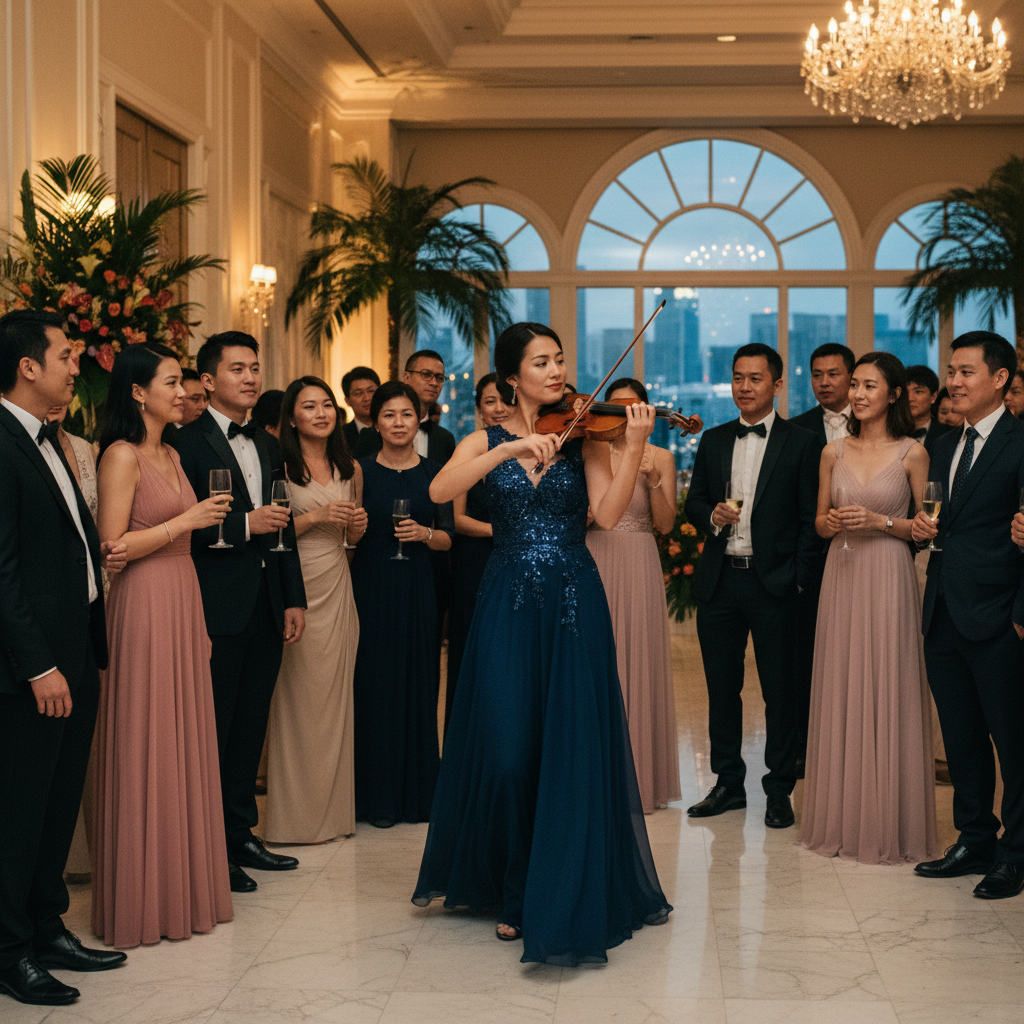
Violinists add a touch of elegance and sophistication to any event in Singapore, from wedding ceremonies to gala dinners. The choice between a roving or staged performance, however, significantly impacts the guest experience and overall event flow. Both formats offer distinct advantages, depending on your event's specific needs and objectives.
This guide explores the differences between roving and staged violinists, offering insights into their suitability for various event types and venue considerations. We examine factors such as audience interaction, logistical requirements, and acoustic impact. Understanding these distinctions will help you make an informed decision and ensure your chosen performer perfectly complements your event vision.
Understanding Roving Violinists
A roving violinist moves freely among guests, creating an intimate and personal musical experience. This format is ideal for cocktail receptions, networking sessions, or smaller corporate events where direct interaction is desired. The violinist can serenade individual tables or groups, engaging guests up close.
The cost for a roving violinist in Singapore typically ranges from SGD 500 to SGD 800 for 1 to 2 hours of performance. We often recommend two 45-minute sets with a short break. This format generally requires minimal technical setup, usually just a small amplifier or even purely acoustic, making it versatile for various areas within a venue like a hotel ballroom or an outdoor garden at Sentosa.
The Impact of Staged Violinists
A staged violinist performs from a fixed location, providing a focal point for the audience. This format is well-suited for formal segments of an event, such as a wedding march-in, a key note address interlude, or during the main course of a dinner and dance. Their performance becomes a featured act, allowing guests to relax and enjoy the music without direct engagement.
Pricing for a staged violinist starts from SGD 600 to SGD 900 for 1 to 2 hours, often including a basic sound system to ensure clear projection across the venue. A staged setup works best in venues with a designated performance area or stage, ensuring all guests have a good view and audio experience. For larger venues like the F1 Pit Building, a more robust sound system might be required, incurring additional costs.
Choosing the Right Format for Your Event
Consider your event's primary objective when making your choice. For brand activations or networking events where you want to break the ice and encourage conversation, a roving violinist fosters engagement. For example, at a product launch at Jewel Changi Airport, a roving performer can draw attention to specific booths.
If your event has a formal program or requires background music that sets a sophisticated tone without distraction, a staged violinist is more appropriate. For a gala dinner at Marina Bay Sands, a staged violinist can provide elegant musical interludes between speeches, maintaining a refined atmosphere.
Logistical and Technical Considerations
Roving violinists need clear pathways and sufficient space to move comfortably without disrupting catering staff or guests. Ensure the venue layout allows for this movement. Acoustic considerations are also important; they need to be heard over ambient noise. For this reason, many roving acts use a small, discreet portable amplifier.
Staged violinists require a designated performance area, access to power outlets, and potentially a sound check. Coordinate with the venue's technical team to ensure proper stage setup and sound reinforcement. Confirming these details early helps avoid last-minute issues and ensures a smooth performance for your violinist.